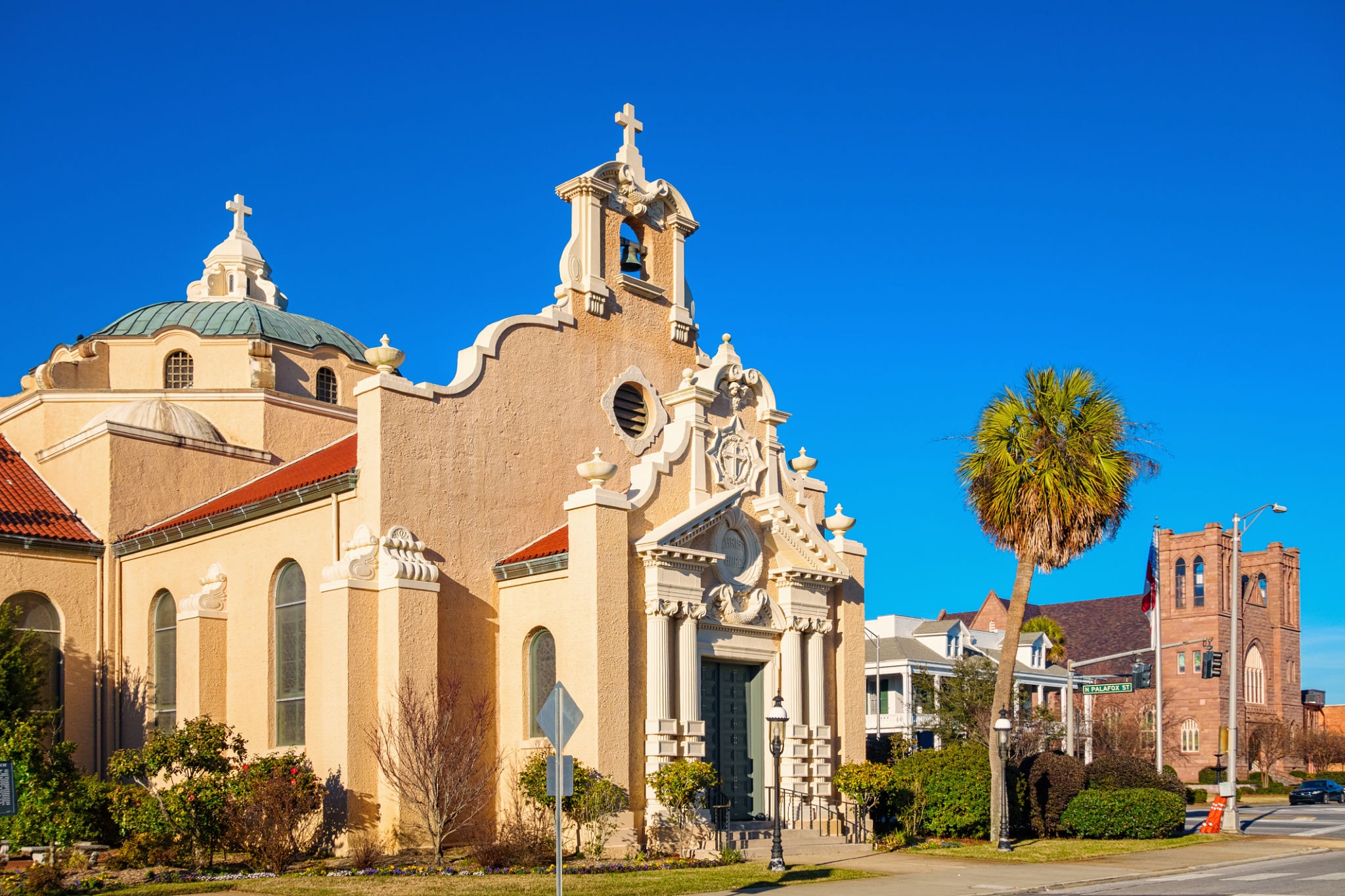
Pensacola, Florida
The History of Pensacola
Over 450 Years of Exploration, Conflict, Resilience & Culture
Few American cities carry as much history as Pensacola. Perched on the northwestern tip of Florida along the Gulf of Mexico, Pensacola has been a crossroads of empires, a theater of war, the cradle of naval aviation, and a resilient community that has rebuilt itself time and again.
A Journey Through Time
The Pensacola Timeline
Spanish Exploration
Tristán de Luna's Doomed Colony
Spanish explorer Tristán de Luna y Arellano led an expedition of 1,500 settlers to establish the first European settlement in what is now the continental United States — predating St. Augustine by six years. The colony at Pensacola Bay was struck by a catastrophic hurricane just weeks after arrival, destroying most of the supply ships and forcing abandonment by 1561. The settlement is considered the first attempted European colony on the continent.
Colonial Founding
Permanent Settlement Established
Spain returned to Pensacola Bay in 1698, establishing a permanent fort and settlement at the site. The strategic deep-water harbor made it one of the most coveted ports in the Gulf of Mexico. Over the next century, Pensacola would change hands five times — between Spain, France, and Great Britain — earning its enduring title as the 'City of Five Flags.'
Battle of Pensacola
Bernardo de Gálvez Captures Pensacola
During the American Revolutionary War, Spanish Governor Bernardo de Gálvez led a decisive campaign against British-held Pensacola. After a two-month siege, the British surrendered on May 10, 1781 — a victory that secured Spain's control of West Florida and helped divert British resources from the American colonies. Gálvez is celebrated as a hero of American independence, and his portrait hangs in the U.S. Capitol.
American Era Begins
Andrew Jackson & the Transfer to the United States
Under the Adams-Onís Treaty of 1819, Spain ceded Florida to the United States. On July 17, 1821, General Andrew Jackson arrived in Pensacola to formally accept the transfer of West Florida. Jackson briefly served as the first military governor of Florida, and Pensacola became the territorial capital. The city's deep harbor and strategic location made it immediately valuable to the young nation.
Naval Heritage
Pensacola Navy Yard Founded
The U.S. Navy established the Pensacola Navy Yard in 1825, recognizing the bay's exceptional depth and sheltered waters. It became one of the most important naval installations in the American South. The yard built and repaired warships for decades, cementing Pensacola's identity as a Navy town — a legacy that endures to this day with Naval Air Station Pensacola.
The Civil War
Fort Pickens & the War Between the States
Pensacola was a flashpoint at the outbreak of the Civil War. Confederate forces seized the Pensacola Navy Yard in January 1861, but Union troops held Fort Pickens on Santa Rosa Island — one of the few Southern forts never to fall to the Confederacy. The two sides exchanged artillery fire across the bay in 1861, making Pensacola one of the earliest battlegrounds of the war. The city suffered significant damage before Union forces recaptured it in 1862.
Cradle of Naval Aviation
The Birth of Naval Air Station Pensacola
In 1914, the U.S. Navy established its first air station at Pensacola, making it the birthplace of American naval aviation. The station trained the nation's first military pilots, earning Pensacola the title 'The Cradle of Naval Aviation.' Over the decades, NAS Pensacola has trained more than 35,000 aviators, including many of America's most celebrated military heroes and astronauts.
Blue Angels
The Blue Angels Take Flight
The U.S. Navy's flight demonstration squadron, the Blue Angels, was founded in 1946 and made Pensacola their permanent home base. Their precision aerial performances over the Gulf Coast have thrilled millions of spectators and become one of the most iconic symbols of Pensacola. The National Naval Aviation Museum at NAS Pensacola, one of the most visited museums in the Southeast, chronicles this extraordinary legacy.
Natural Disaster
Hurricane Ivan — The Storm of the Century
On September 16, 2004, Hurricane Ivan made landfall near Gulf Shores, Alabama, just west of Pensacola, as a Category 3 storm. The devastation was catastrophic — the Three Mile Bridge was destroyed, Pensacola Beach was nearly wiped out, and tens of thousands of homes were damaged or destroyed. Ivan caused over $14 billion in damage in the Pensacola area alone. Yet true to its character, the community rebuilt stronger than before.
Environmental Crisis
The Deepwater Horizon Oil Spill
The explosion of the Deepwater Horizon oil rig on April 20, 2010 triggered the largest marine oil spill in U.S. history. Oil washed ashore on Pensacola Beach and throughout the Gulf Coast, devastating the local fishing industry, tourism, and marine ecosystems. The community rallied together, and through years of cleanup and restoration efforts, Pensacola's beaches have largely recovered their world-renowned beauty.
Modern Pensacola
A City Reborn — Pensacola Today
Today, Pensacola is one of Florida's fastest-growing cities, celebrated for its vibrant arts scene, thriving restaurant culture, world-class beaches, and strong military community. The revitalized downtown, the Blue Wahoos waterfront stadium, the National Naval Aviation Museum, and the pristine shores of Pensacola Beach draw millions of visitors each year. Pensacola's story is one of extraordinary resilience — a city that has faced conquest, war, storms, and disaster, and emerged each time more vibrant than before.
Shaped by Great People
Notable Figures of Pensacola
Bernardo de Gálvez
1746–1786
Spanish Governor & Revolutionary War Hero
As Governor of Spanish Louisiana, Gálvez led the campaign that captured Pensacola from the British in 1781, diverting critical British resources during the American Revolution. He is one of only eight people to hold honorary U.S. citizenship.
Andrew Jackson
1767–1845
General & 7th President of the United States
Jackson accepted the transfer of Florida from Spain in Pensacola in 1821 and served as the first military governor of Florida. His time in Pensacola shaped his political career and eventual rise to the presidency.
Don Tripp
1930–2010
Pensacola Civic Leader & Businessman
A beloved figure in Pensacola's business and civic community, Don Tripp helped shape the modern economic landscape of the city through decades of leadership and community investment.
Roy Jones Jr.
1969–present
World Champion Boxer
Born and raised in Pensacola, Roy Jones Jr. is widely regarded as one of the greatest boxers of all time. He held multiple world championships across four weight classes and represented the United States at the 1988 Seoul Olympics.
Emmanuel Cleaver II
1944–present
U.S. Congressman & Former Mayor
A native of Pensacola, Cleaver went on to become Mayor of Kansas City, Missouri and a U.S. Representative, carrying the values of his Gulf Coast upbringing throughout a distinguished career in public service.
Be Part of Pensacola's Next Chapter
Pensacola's history is one of resilience, reinvention, and community. Let Coastal Funding Corporation help you plant roots in this remarkable city.